
From renewable energy solutions to next-generation electronics, progress in solving our world’s greatest challenges often depends on the discovery of new, high-performance materials. Yet, the process of creating these materials is often slow, expensive, and based on trial and error. This inefficiency is a significant bottleneck that hinders our ability to address pressing energy and environmental issues. To accelerate innovation, we need a new, more rational approach to material design.
This project finds inspiration in the natural world. A snowflake, for example, is a masterpiece of complex design, formed efficiently and with low energy from a disordered, non-equilibrium state. By studying the principles behind such natural phenomena, researchers aim to establish a new “science of non-equilibrium.” This new science will be built by combining cutting-edge technology that can measure material synthesis in real-time with the predictive power of artificial intelligence, which can identify patterns humans might miss. This will enable them to move beyond observing nature to truly understanding its rules. One outcome is, for example, to accelerate the discovery of novel catalysts.
The goal is to create a development hub that can efficiently produce innovative, sustainable, and high-performance materials, transforming our approach to solving global challenges.
What's New
-
 July 9, 2026
- PUBLICATIONS
Paper co-authored by Dr. Nasu has been published in Chemical Communications -
June 16, 2026
- PUBLICATIONS
Dr. Nasu’s paper has been published in ACS Applied Energy Materials -
June 3, 2026
- PUBLICATIONS
Paper co-authored by Dr. Nasu has been published in ACS Applied Energy Materials
Project Members
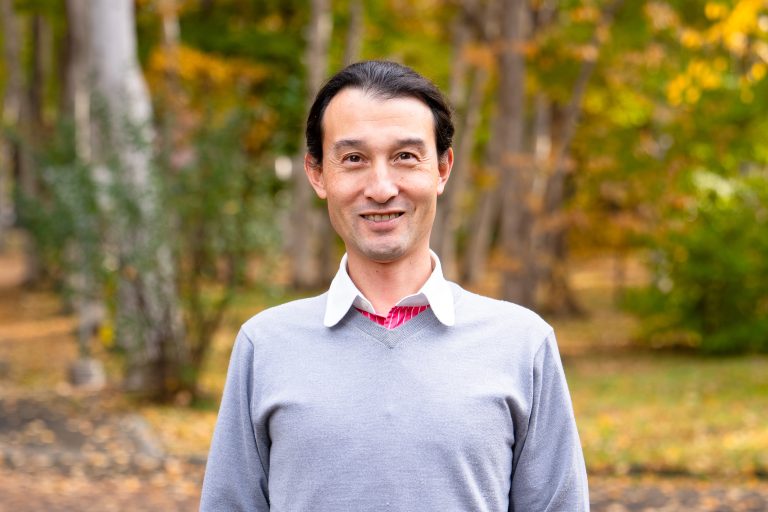
Principal Investigator
Professor
Institute of Low Temperature Science
Hokkaido University
Astrophysical Chemistry/Low Temperature Nanomaterial Science Group
Co-Investigator
Professor
Faculty of Engineering
Hokkaido University
Co-Investigator
Professor
School of Earth, Energy and Environmental Engineering
Kitami Institute of Technology
Co-Investigator
Professor
Research Institute for Electronic Science
Hokkaido University
Co-Investigator
Professor
Graduate School of Frontier Sciences
The University of Tokyo
Specially Appointed Professor
Institute for Chemical Reaction Design and Discovery (ICReDD)
Hokkaido University
Co-Investigator
Assistant Professor
College of Engineering
Materials Science &Engineering
University of Michigan